
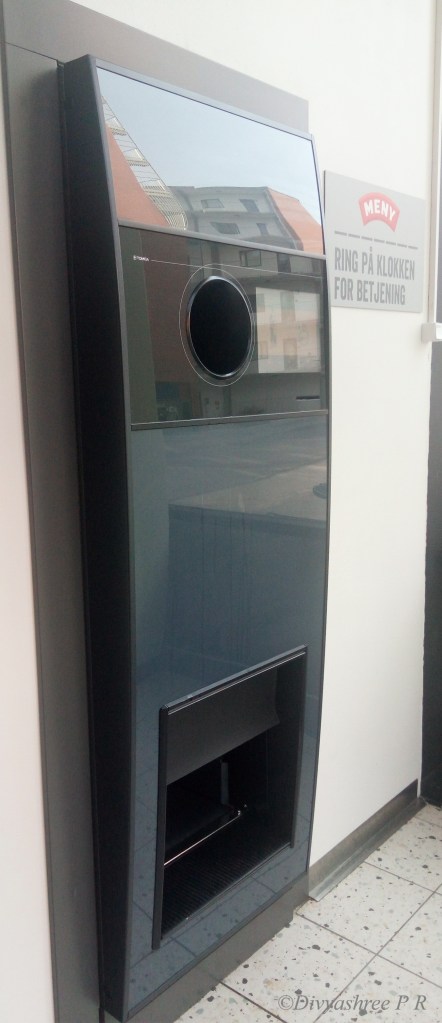
As I walked towards the grocery shop, I noticed a man standing in front of a huge grey machine carrying a bag full of empty cans and bottles. He was placing each bottle, one after the other, and pushing it through the small hole into the grey machine. With a whirring sound, the apparatus pulled the bottle, juggled it on an conveyer belt, and scanned the barcode which was on the bottle. Then the bottle traveled the far end of the belt into a container and eventually shredded it with a satisfying crunch. At the end the machine spitted out a white slip which he then collected and went inside the grocery store to shop.
I was surprised and was wondering what did he do for couple of minutes. Who took all those empty bottles on the other end?
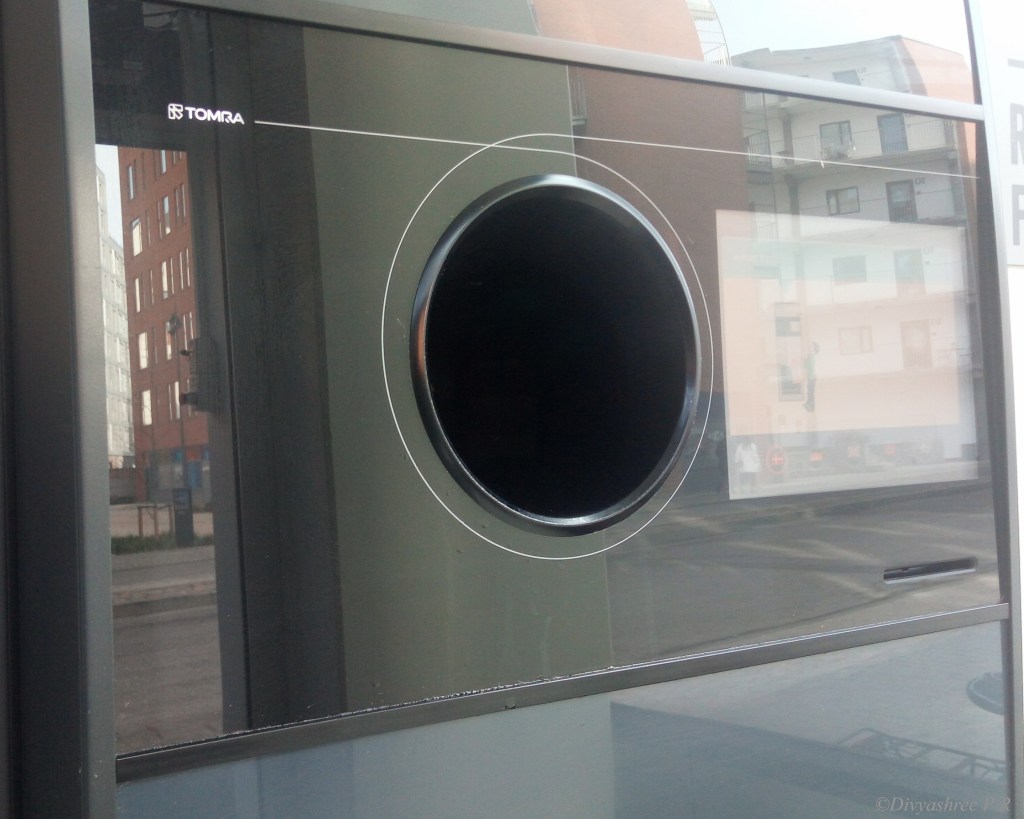
Later I did some searching and found out that in Scandinavia, during the 1980s, a deposit and return system was employed for effective recycling of cans and bottles. The machine used for it is called as “Reverse Vending Machine” which is popularly known as “Pant Machine”.
What is a Pant Machine?
A machine that takes bottles and cans, and scans for the deposit mark, bar code and shape. It then calculates how much money to refund to you. The reverse vending machine feeds the bottles and cans into containers that are collected by a system. The bottles and cans are then recycled, melted and turned into new bottles and cans. This allows to reuse the cans and bottles again and again effectively.
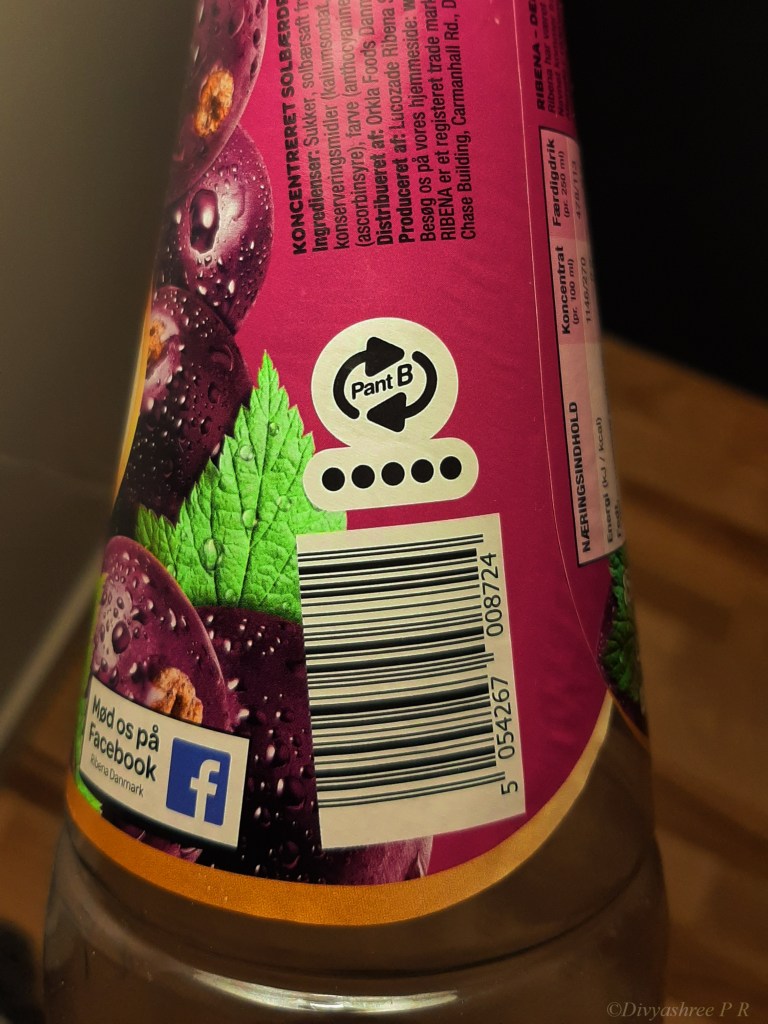
In Denmark ABC deposit system is followed. The bottle or can with Pant ‘A’, ‘B’ and ‘C’ takes different deposit while you buy them in the shop. When you return them the deposit money is returned. It was first introduced in Sweden, the deposit on the bottles and cans is called pant. In Swedish, a verb, “PANTA”, more generally means “to hand something in and get money in return“.
Swedish introduced ‘pant’ on aluminium cans in 1984. Today, the deposit for cans and small bottles in Denmark is 1 DKK for pant ‘A’ and 1.5 DKK for pant ‘B’ and 3 DKK for pant ‘C’ marking.
After inserted into the pant machine, the recycled bottles and cans get transported to their hub where the material is recycled and turned into new bottles every year. Most of the European countries follow this method.
Plastic is degrading our precious habitats by wreaking havoc on our marine environment – dying dolphins and choking turtles. It is vital we act now to tackle this threat and curb the millions of plastic bottles a day that go unrecycled.
Where can I take my empty bottles and cans?
Nearly 3000 stores throughout Denmark have ‘reverse vending machines’, where you can return all deposit-marked bottles and cans i.e., pant ‘A’, ‘B’ or ‘C’. You can also return bottles without a deposit mark that are part of the deposit and return system to locations that sell the same shape bottle.
Around 12 towns or cities have a station to which you can deliver a sack containing up to 90 bottles and cans. According to Wikipedia, in 2005 93% of all recyclable bottles and 80% of all drink cans in Norway were returned.
Isn’t this idea of recycling good for our environment? Don’t you think we need such machines in every country, in every grocery shop where they sell such drinks?
Next time after a house party make sure to collect all used tin or plastic bottles and put it to the nearby pant machine. If not a huge amount, at least you get back your deposit on bottles and cans that can be used for your next party.
After a great party yesterday, I’m off to ‘pant-ing’ today, adios…
 Q3 Info
Leave a comment