
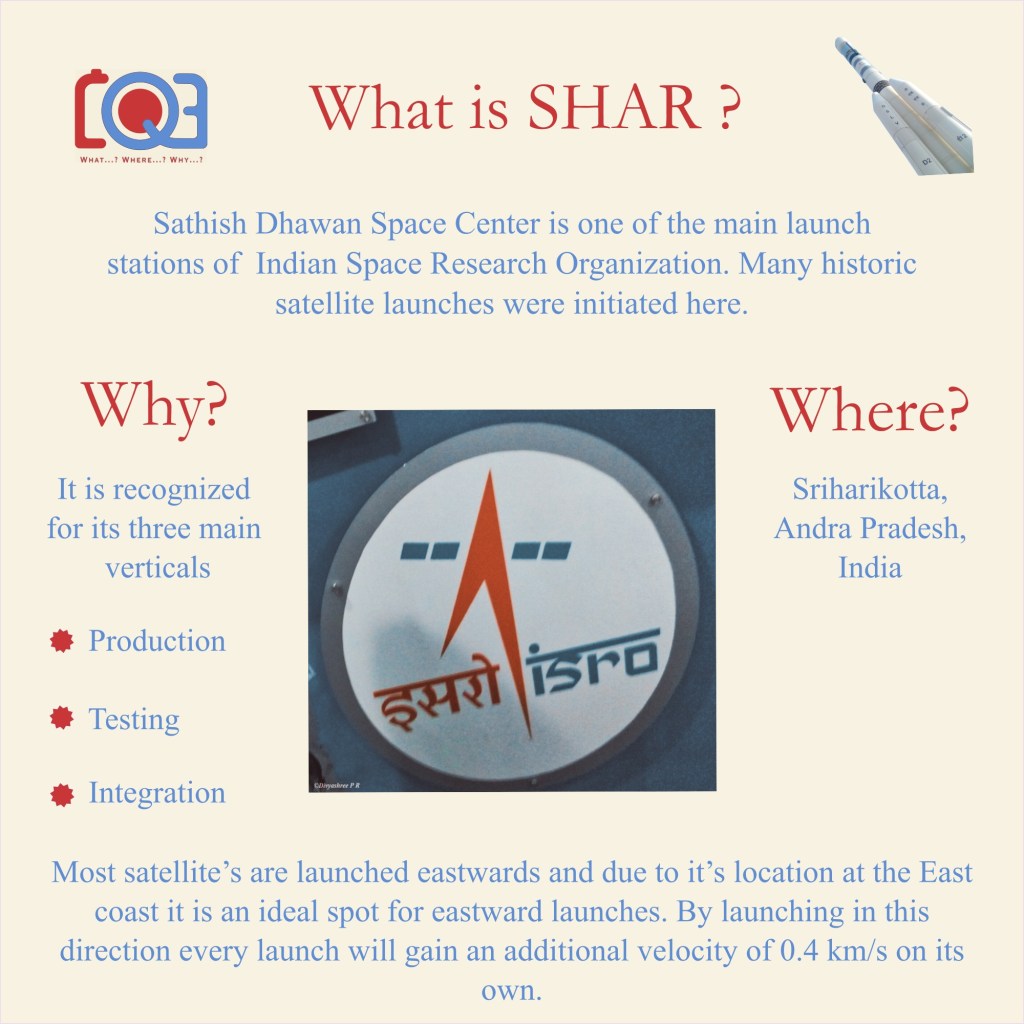
Being a kid and like million other Indian kids, I too was played by my own mother saying that she’ll bring me the moon to my very palms if I ate food properly. Over the time I understood the act of deceit was in fact her act of love. But the moon is still such a magic that makes me fall prey for it a 1000 times. Who would not want to visit moon? Maybe many, but, I am not one of them. This honey-sweet childhood memory of mine eventually became an obsession to visit the place where the nation’s dreams to reach the very moon is being made into reality. I feel lucky enough to have visited Sathish Dawan Space Centre, Shriharikotta (Andrapradesh, Headquarters of ISRO) India.
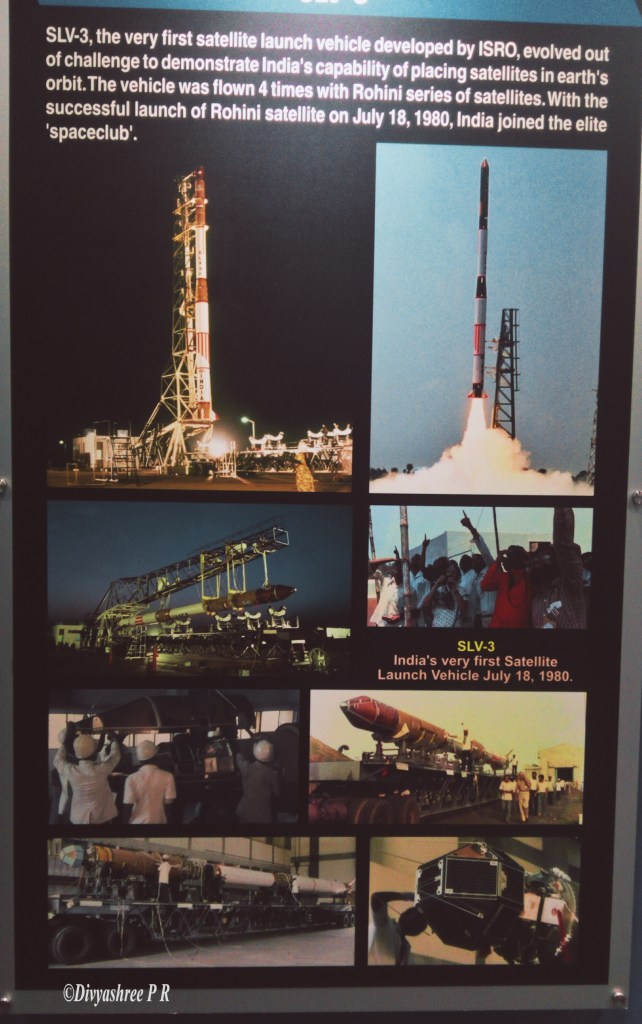
Never thought it was possible for me to visit this place but I had always dreamed of it. We started with a brief address by the SHAR officials in a conference hall with a peck of knowledge about the history of SHAR, procedures of a satellite launch, specifications of the space stations etc.
The main verticals of SHAR are:
- Production plant
- Testing
- Integration of rockets
After a brief introduction of ISRO, we headed off to the facility in the bus. After the security check at Gate 1, we stepped into the MCC (Mission Control Centre) of the space centre. I had to pinch myself to believe that I was actually standing at the place where higher dignitaries and scientists including the ones from the NASA, our prime minister and our own beloved (late) Dr. A. P. J. Abdul Kalam had once gathered for witnessing the launches from the space station. After gathering details of the working of MCC and clarifying the doubts from the officials there, we boarded the bus again to explore further.
We set off to visit the two launch pads of SHAR. Mr. Suresh Kumar, a guide from SHAR accompanied us. The first launch pad was situated 6 kms away from the MCC, surrounded by sea at a distance. As we got out of our vehicles we saw the launch pad at a distance. The launchpad appeared similar to a mobile tower, with many mechanical parts attached to it, however, the tower was ten times bigger. The launch pad was guarded with 3 towers which actually resembled mobile towers. Suresh later clarified that those three additional towers were in fact lightening arresters. These are used to protect the launch pad from lightening. ISRO created a record by launching 104 satellites on women’s day in one go! Did you know that at the time of launch, the building around the umbilical tower (where the assembled rocket is placed) moves 200 meters backwards.
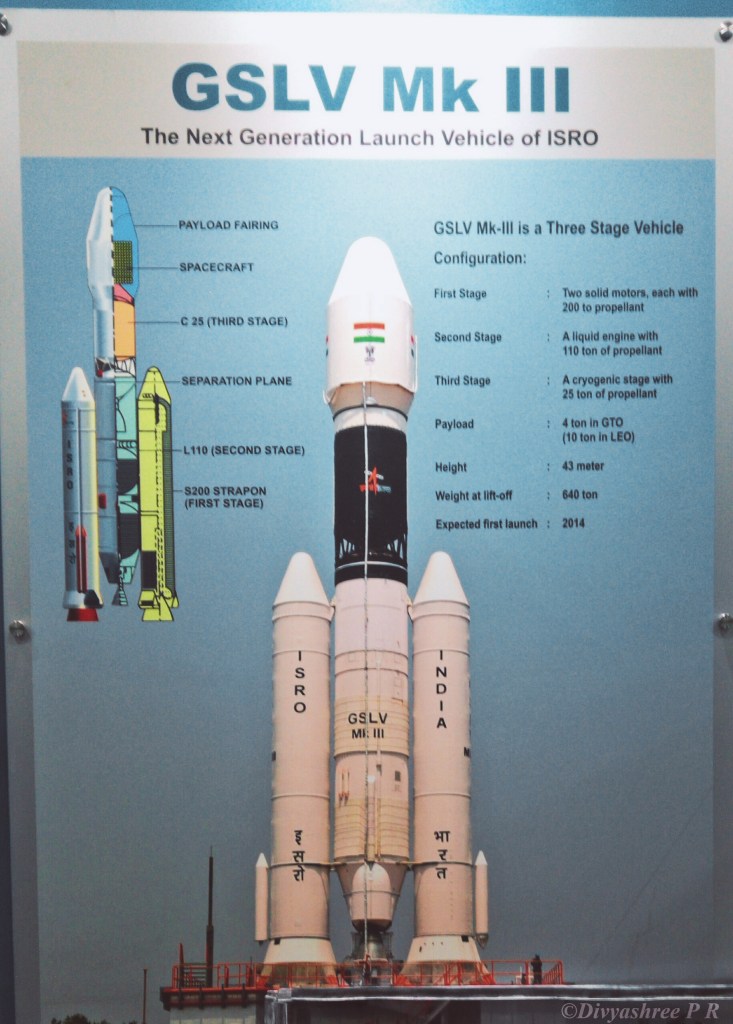
The first launch pad was designed for PSLV (Polar Satellite Launch Vehicles) whereas the second launch pad was designed for GSLV (Geo Synchronous Launch Vehicles). It was situated a kilometer away from the first launch pad. It had better functionalities and could launch a pre-assembled rocket, whereas in launch pad 1, the rocket is assembled on the pad.
The weight of a PSLV is 250 tonnes and could be loaded with satellites weighing 1500 kgs. And the weight of a GSLV is 300 tonnes and can carry satellites weighing about 2500 kgs. PSLV has 7 and GSLV has 3 launching stages respectively. At time of launch no one is allowed 10 kms near any of the launch Pads as the heat and radiation emitted is harmful. These launch pads are at a distance of 16 kms from the main gate. As I boarded my bus,I took one last glance to the launch pad from where a lot of proud missions and dreams of India were launched high.
This place indeed has put India firmly on the space map. No one can step in and out of SHAR without getting inspired, for it is a place, that gifted wings to the dream of a nation to reach up to the moon, mars and more!
This blog is co-authored with Akshay G. Bhat, who shares his experience during his visit to SHAR.
 Q3 Info
Leave a comment